Bionicle Instructions: A Comprehensive Guide
Navigating the world of Bionicle construction requires readily available instructions, spanning official LEGO resources and vibrant fan communities. Discover how to locate, interpret, and utilize these guides effectively for a fulfilling building experience.
Explore digital options like the LEGO website and apps, alongside third-party instruction databases, ensuring seamless access to building schematics. Uncover solutions for lost pieces and tackle common assembly challenges with ease.
Delve into archived instructions for older sets and learn techniques for digitizing physical manuals. Embrace the creativity of MOCs (My Own Creations) with dedicated resources and advanced building methods.
Bionicle, launched in 2001, represented a significant departure for LEGO, introducing a storyline-driven universe populated by biomechanical heroes and villains. These sets, unlike traditional LEGO System bricks, primarily utilized Technic pieces, offering a unique building experience focused on articulation and mechanical functionality. Understanding this core difference is crucial when approaching Bionicle instructions.
Early Bionicle sets often came with complex instruction manuals, detailing each step of the construction process. These manuals were essential, given the intricate nature of the builds. However, as the line evolved, so did the complexity of the sets, and finding original instructions became increasingly challenging. Fortunately, the dedicated Bionicle fan community has stepped in to preserve and share these vital resources.
This guide aims to provide a comprehensive overview of locating and utilizing Bionicle instructions, from official LEGO sources to third-party websites and archived materials. Whether you’re rebuilding a childhood favorite or embarking on a new Bionicle adventure, this resource will equip you with the knowledge to succeed.
Understanding Bionicle Building Techniques
Bionicle construction diverges from traditional LEGO building, emphasizing Technic elements for robust connections and posability. Key techniques involve utilizing friction joints, axles, and connectors to create articulated limbs and torsos. Instructions often showcase specific methods for achieving desired ranges of motion and structural integrity.
Mastering these techniques requires careful attention to detail within the instructions. Pay close attention to the orientation of pieces, particularly when forming joints. Incorrect alignment can lead to instability or limited articulation. Furthermore, Bionicle sets frequently employ specialized pieces with unique connection points, demanding precise placement as illustrated in the guides.
Recognizing common building patterns, such as gearbox mechanisms and skeletal structures, will enhance your understanding and allow for greater customization. Studying completed models and comparing them to the instructions can reveal subtle nuances in construction. Ultimately, successful Bionicle building relies on a blend of following instructions and developing an intuitive grasp of Technic principles.
Locating Official LEGO Bionicle Instructions
The primary source for official Bionicle instructions is the LEGO website itself. However, navigating their archive can be challenging for older sets. LEGO’s customer service department can often provide downloadable PDFs for discontinued models upon request. Alternatively, websites like Brick Instructions (lego.brickinstructions.com) compile links to official LEGO instructions, offering a more streamlined search experience.

Libble.eu and Gebruikershandleiding.com also host scanned copies of original instruction manuals, though quality may vary. These sites often feature user-submitted content, expanding the available resources. Remember to verify the set number and year to ensure you’re accessing the correct instructions. LEGO’s official channels remain the most reliable source, but these supplementary websites can prove invaluable when official resources are scarce.
Always prioritize official LEGO instructions when available, as they guarantee accuracy and completeness. Utilize the provided resources as backups or for sets with missing manuals.
Digital Instructions: LEGO Website & Apps
LEGO’s official website offers a growing library of digital instructions, accessible through their “Building Instructions” section. While not all Bionicle sets are currently available digitally, the selection is expanding. The LEGO Builder app, available on iOS and Android, provides an interactive building experience, allowing users to view instructions on their smartphones or tablets. This app often includes features like 3D rotation and step-by-step zooming, enhancing clarity.
Digital instructions eliminate the need for physical manuals, reducing the risk of loss or damage. They also offer the convenience of accessing instructions on multiple devices. However, older Bionicle sets may not be fully represented in the digital format. LEGO frequently updates its digital library, so checking periodically is recommended. The app’s interactive features can be particularly helpful for complex builds.
Ensure you have a stable internet connection to download and view digital instructions effectively.
Third-Party Instruction Websites
Beyond LEGO’s official resources, several dedicated websites curate Bionicle building instructions. Brickinstructions.com and Libble.eu are prominent examples, hosting scanned manuals and user-submitted guides for a vast range of sets, including the Roodaka (8761) model. These platforms often fill gaps where official digital instructions are unavailable, particularly for older, discontinued sets.
Websites like legobricksinstructions.com and le-gofun.ru provide step-by-step visual guides, sometimes offering alternative perspectives or clearer images than original manuals. However, it’s crucial to exercise caution when using third-party sites, verifying the accuracy of instructions and being mindful of potential website security risks. User reviews and community feedback can help assess reliability.
Always cross-reference instructions with multiple sources when possible, ensuring a correct and enjoyable building experience.
Specific Set Instructions: Roodaka (8761)
Roodaka (8761), a formidable Visorak Hordika from the Bionicle universe, presents a unique building experience. Finding instructions for this set is generally straightforward, thanks to its popularity and the availability of resources. LEGO’s official website may not directly host the manual currently, but numerous third-party sites have archived it.
Brickinstructions.com, Libble.eu, legobricksinstructions.com, and le-gofun.ru all offer downloadable or viewable instructions for Roodaka. These resources provide page-by-page guides, detailing the assembly process from the initial frame construction to the intricate Hordika features. Pay close attention to the limb connections and the positioning of the Visorak spines.
The set comprises 76 building steps, with page 16 focusing on crucial body articulation. Ensure you have a complete parts inventory before beginning to avoid frustration during construction.
Roodaka (8761) ー Step-by-Step Guide (Page 16 Focus)
Page 16 of the Roodaka (8761) instructions centers on completing the upper torso and initiating the connection of the legs. Specifically, this stage involves attaching the silver friction ridges and Technic pins to the central spine piece. Carefully align these components, ensuring a secure fit for optimal articulation later on.
The instructions depict the addition of the dark grey armor plating, which forms the protective shell around Roodaka’s core. Pay attention to the orientation of these pieces; they should mirror each other on both sides. Next, the page details the preliminary attachment points for the legs, utilizing ball joints and axle connectors.
Double-check that all connections are firm but not overly forced, preventing potential breakage. This stage is crucial for establishing the overall stability and poseability of the Hordika. Refer to the visual guide closely for accurate placement.
Roodaka (8761), Parts Inventory
The Roodaka (8761) set comprises 137 pieces, encompassing a diverse range of Bionicle elements. Key components include the dark grey shell pieces forming the primary armor, alongside silver friction ridges and Technic pins crucial for articulation. Numerous black and dark grey bones establish the skeletal structure, providing a robust framework.
Distinctive to Roodaka are the specialized head and claw pieces, defining her unique Hordika form. Several translucent green elements contribute to her venomous aesthetic, particularly within the claw mechanisms. The inventory also features a variety of Technic axles, connectors, and ball joints, facilitating complex movement.
Carefully compare your received parts against the official inventory list to ensure completeness. Missing pieces can hinder construction; replacement options are detailed elsewhere in this guide. Organizing the parts by type and color streamlines the building process, enhancing efficiency.

Troubleshooting Common Building Issues
Encountering difficulties during Bionicle construction is common, often stemming from incorrect part orientation or insufficient force during connections. Frequently, friction joints resist assembly; applying gentle, even pressure while rotating the pieces can resolve this. Ensure Technic pins are fully inserted, verifying they ‘click’ into place for secure fastening.

If a section feels unstable, double-check the preceding steps for errors. Misaligned bones or shells can compromise structural integrity. Pay close attention to symmetry, as Bionicle designs often rely on balanced construction. Avoid excessive force, which can damage delicate parts or strip connectors.
For complex mechanisms, refer back to the instructions frequently, scrutinizing each connection point. Online resources and community forums offer solutions to specific challenges. Remember, patience and methodical checking are key to overcoming building obstacles.
Lost Pieces & Replacement Options
Misplacing Bionicle elements is a frequent frustration, but several avenues exist for replacement. LEGO’s official customer service offers replacement parts, often free of charge, particularly for recent sets. However, providing proof of purchase and detailed part identification is usually required.
BrickLink, an online marketplace, is a vast resource for individual LEGO parts, allowing you to purchase precisely what you need from various sellers. eBay and other auction sites also feature Bionicle parts, but pricing can vary significantly. Consider joining Bionicle fan communities; members often trade or sell spare parts.
Before ordering, carefully identify the missing piece using the instruction manual or online parts lists. Accurate identification prevents ordering the wrong component. Explore using substitute parts from other sets if a perfect match isn’t immediately available.
Incorrectly Assembled Sections
Encountering errors during Bionicle construction is common, especially with complex models. Carefully review the instructions, comparing your build to the diagrams step-by-step to pinpoint discrepancies. Often, a single misplaced piece can cause cascading issues in later stages.
Gentle disassembly is crucial; forcing parts apart can damage connectors. Utilize a LEGO brick separator tool to safely pry pieces without causing stress. Double-check the orientation of pieces – Bionicle elements often have specific alignments for proper function.
Online communities and forums are invaluable for troubleshooting. Posting photos of the problematic section can elicit helpful advice from experienced builders. Remember to focus on the specific step where the error occurred, providing clear visual references. Patience and methodical review are key to resolving assembly issues.
Bionicle Instructions for Older Sets
Locating instructions for vintage Bionicle sets can present a challenge, as official LEGO support may be limited. Fortunately, dedicated fan communities have diligently archived many older manuals. Websites like BrickInstructions.com and Libble.eu offer extensive libraries of scanned instructions, often available for free download.
Alternatively, exploring online LEGO forums and Bionicle-specific groups can yield helpful resources. Members frequently share scanned copies or provide links to archived instructions. Consider searching image databases using the set number (e.g., 8761 for Roodaka) to uncover visual guides.
If digital copies are unavailable, scanning physical manuals is a viable option. High-resolution scans ensure clarity and readability. Contributing your scans to online archives benefits the entire Bionicle community, preserving these valuable resources for future generations.
Archived Instructions & Communities

Numerous online platforms serve as repositories for archived Bionicle instructions, preserving access to building guides for discontinued sets. BrickInstructions.com and Libble.eu stand out as comprehensive resources, hosting scanned manuals and step-by-step guides contributed by enthusiasts. These archives often include instructions in multiple languages, catering to a global fanbase.
Beyond instruction archives, vibrant Bionicle communities flourish on platforms like Eurobricks and Reddit (r/Bionicle). These forums provide spaces for sharing information, requesting assistance, and discussing building techniques. Members frequently collaborate to locate missing instructions or decipher complex builds.
Active communities also foster a culture of sharing custom creations (MOCs) and offering building advice. Engaging with these groups can significantly enhance your Bionicle building experience, providing support and inspiration.
Scanning & Digitizing Physical Manuals
For Bionicle enthusiasts possessing physical instruction manuals, scanning and digitizing them ensures long-term preservation and accessibility. A flatbed scanner is ideal, offering high-resolution images, but smartphone scanning apps can provide a convenient alternative. Ensure proper lighting and a clean scanning surface for optimal results.
After scanning, image editing software can enhance clarity and remove imperfections. Consider converting scans to PDF format for easy sharing and archiving. Online tools also facilitate Optical Character Recognition (OCR), transforming images of text into searchable, editable formats.
Contributing digitized manuals to online archives like BrickInstructions benefits the entire Bionicle community. Sharing your efforts helps preserve these valuable resources for future generations of builders, ensuring continued access to building guides.
Custom Bionicle Model Instructions
Beyond official LEGO sets, the Bionicle community thrives on creativity, producing countless custom models – MOCs (My Own Creations). Documenting these builds with clear instructions allows others to recreate your designs. Instruction formats vary, ranging from simple image sequences to detailed, step-by-step guides.
Software like LEGO Studio and BrickLink’s Stud.io are popular choices for creating digital instructions. These tools enable precise part placement and generate rendered images for each building step. Alternatively, hand-drawn diagrams or photographs can effectively convey construction techniques.
Sharing MOC instructions on platforms like Eurobricks, Flickr, and dedicated MOC websites fosters collaboration and inspires other builders. Detailed parts lists are crucial, often utilizing BrickLink to identify and source necessary components.
MOC (My Own Creation) Resources
The Bionicle MOC (My Own Creation) community is a vibrant hub for inspiration and collaboration. Eurobricks forums, particularly the Bionicle section, are a prime resource for showcasing builds, receiving feedback, and discovering new techniques. Flickr and other image-sharing platforms host extensive galleries of MOCs, offering visual inspiration.
Websites dedicated to LEGO MOCs, like Rebrickable, allow builders to share instructions, parts lists, and even purchase missing pieces. BrickLink is invaluable for sourcing specific Bionicle elements, often discontinued by LEGO. YouTube channels feature tutorials on advanced building techniques and MOC showcases.
Dedicated MOC designers often maintain personal websites or blogs, providing detailed build guides and insights into their creative process. Engaging with these resources fosters skill development and expands your Bionicle building horizons.
Instruction Formats for MOCs

MOC instructions vary widely in format, reflecting the creator’s preferences and skill level; Studio, a LEGO CAD software, is popular for generating high-quality, step-by-step digital instructions with parts lists. These instructions are often exported as PDF files for easy distribution.
Image-based instructions, utilizing photographs or digital renderings, are common, particularly for simpler MOCs. These can range from detailed, annotated images to quick snapshots illustrating key build steps. Video tutorials offer a dynamic approach, demonstrating techniques in real-time.
Some creators utilize LEGO Digital Designer (LDD), though it’s becoming less prevalent. Parts lists are crucial, often generated automatically by CAD software or compiled manually. Clear and concise instructions, regardless of format, are essential for successful replication.
Advanced Building Techniques for Bionicle
Beyond basic connections, Bionicle building thrives on sophisticated techniques. Gearbox mechanisms, utilizing Technic gears and axles, introduce movement and functionality to MOCs, creating dynamic poses or automated features. Understanding gear ratios is key to controlling speed and torque.
Creating articulated joints—knees, elbows, shoulders—requires careful planning and strategic use of ball joints, sockets, and friction elements. These allow for a wide range of motion and realistic posing. Studless building, minimizing exposed studs, enhances aesthetic appeal and creates smoother surfaces.
SNOT (Studs Not On Top) techniques involve building sideways, opening up new design possibilities. Mastering these techniques elevates Bionicle creations from simple models to intricate works of art, demanding precision and creativity.
Gearbox Mechanisms
Implementing gearboxes in Bionicle models introduces dynamic movement, transforming static builds into interactive creations. Essential components include Technic gears of varying sizes, axles, and connectors, carefully assembled to transmit rotational force. Understanding gear ratios—the relationship between the number of teeth on gears—is crucial for controlling speed and torque.
Larger gears driven by smaller gears reduce speed but increase torque, ideal for lifting mechanisms. Conversely, smaller gears driving larger gears increase speed but decrease torque, suitable for rapid movements. Experimentation with different gear combinations unlocks diverse functionalities.
Consider incorporating worm gears for non-reversible motion, preventing backsliding. Proper alignment and secure connections are vital for smooth operation and preventing gear stripping, ensuring a robust and reliable mechanism.
Creating Articulated Joints
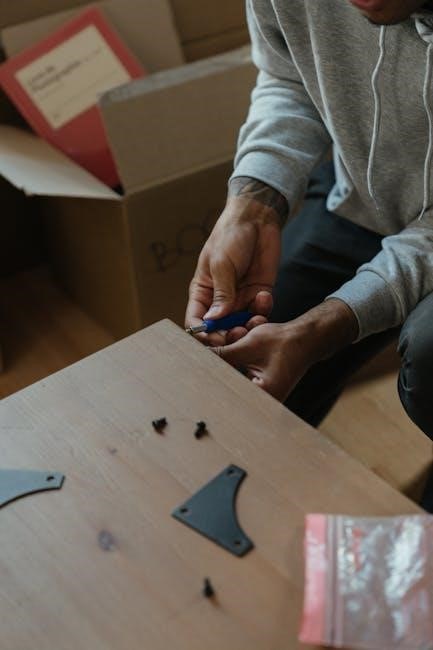
Achieving realistic and fluid movement in Bionicle creations hinges on skillfully designed articulated joints. Utilize Technic ball joints, socket joints, and hinge plates to establish points of articulation, mimicking natural limb movement. Strategic placement of these joints dictates the range of motion and overall poseability of the model.

Employ friction hinges for stable positioning, preventing limbs from flopping under their own weight. Consider using liftarms and connectors to reinforce joints, enhancing durability and load-bearing capacity. Experiment with layering multiple joints to create complex articulation, such as elbows and knees.
Ensure sufficient clearance between parts during movement to avoid binding or resistance. Smooth operation is paramount; test each joint thoroughly to refine the design and optimize performance for dynamic posing and play.