High Flight Poem PDF: A Comprehensive Exploration
Exploring “High Flight” in PDF format offers convenient access to this celebrated sonnet, facilitating study and appreciation of its themes.
Numerous online resources provide downloadable PDFs, catering to educational and personal use, ensuring widespread availability of Magee’s work.
Digital versions preserve the poem’s integrity, allowing for easy printing and offline reading, while copyright considerations necessitate utilizing legitimate sources.
Optimized PDFs enhance the reading experience, with features for adjustable font sizes and clear formatting, benefiting students and aviation enthusiasts alike.
“High Flight”, formally known as “High Flight (An Airman’s Ecstasy),” is a poignant sonnet penned by John Gillespie Magee Jr. during World War II. This lyrical piece transcends a simple description of flight; it’s an exploration of the exhilaration, freedom, and almost spiritual experience of soaring through the skies. The poem quickly resonated with pilots and aviation enthusiasts, becoming a beloved anthem within aviation culture.
Its enduring appeal stems from Magee’s masterful use of imagery and evocative language, capturing the sensation of liberation from earthly constraints. Readers often describe feeling a sense of transcendence and wonder when encountering the poem, mirroring the poet’s own ecstatic experience. The poem’s accessibility, combined with its powerful themes, has cemented its place in literary history.
Today, “High Flight” continues to inspire and move audiences, frequently appearing in military ceremonies and memorial services. The availability of the poem in PDF format ensures its continued accessibility for study, reflection, and appreciation by generations to come, preserving its legacy for years to come.
Historical Context of the Poem
“High Flight” emerged during a pivotal moment in history – World War II. In 1942, John Gillespie Magee Jr., a young American pilot serving with the Royal Canadian Air Force, penned the poem while stationed in England. The world was engulfed in conflict, and the skies were dominated by aerial warfare, making flight a symbol of both danger and liberation.
The poem reflects the romanticized view of aerial combat prevalent at the time, yet transcends mere glorification of war. It speaks to a deeper human yearning for freedom and transcendence, a desire to escape the “surly bonds of Earth.” The availability of “High Flight” in PDF format allows modern readers to connect with this historical context.
Understanding the era in which it was written enhances appreciation for the poem’s themes. The technological advancements in aviation, coupled with the existential anxieties of wartime, fueled Magee’s poetic vision, creating a timeless piece that continues to resonate today, readily accessible through digital PDFs.
John Gillespie Magee Jr.: The Poet’s Life
John Gillespie Magee Jr. (1922-1941) was a gifted American pilot and poet, whose short life profoundly influenced his work. Born into a privileged family, he displayed early literary talent, attending boarding schools known for their academic rigor. His passion for flying led him to join the Royal Canadian Air Force before the United States entered World War II.
Magee’s dual nature – a sensitive poet grappling with existential questions and a daring “adrenaline junkie” – is central to understanding “High Flight.” He penned numerous letters and poems during his final years, revealing a complex inner world. Accessing his work in PDF format provides a convenient way to explore his complete oeuvre.
Tragically, Magee’s life was cut short when he was shot down and killed in action at just 19 years old. Despite his brief career, “High Flight” cemented his legacy, becoming an enduring testament to his poetic vision and love of flight, preserved for generations through digital PDFs.

The Poem’s Publication and Initial Reception
“High Flight”, originally titled “An Airman’s Ecstasy,” first appeared in 1942, posthumously published after Magee’s tragic death. It quickly gained traction, circulating widely among airmen during World War II, resonating deeply with their experiences and aspirations. The poem’s initial reception was overwhelmingly positive, lauded for its evocative imagery and powerful expression of the joy of flight.
Early distribution relied on printed copies and word-of-mouth, but the advent of digital formats, including PDF versions, has broadened its reach significantly. These PDFs allow for easy sharing and preservation of the poem’s text, ensuring its continued accessibility.
The poem’s enduring appeal led to its frequent inclusion in anthologies and its adoption by aviation and military communities. Today, readily available PDF copies facilitate study and appreciation, solidifying “High Flight’s” place as a timeless classic.

Analyzing the Text of “High Flight”
Examining “High Flight” reveals a masterful sonnet structure, rich with themes of freedom and transcendence. PDF versions aid close reading, highlighting imagery and sensory details.
Analyzing the poem’s form and symbolism unlocks deeper meaning, while digital access through PDFs enhances scholarly exploration.
PDF formats support detailed textual analysis, fostering a comprehensive understanding of Magee’s poetic craftsmanship.
Structure and Form: The Sonnet Tradition
“High Flight” adheres to the traditional English (Shakespearean) sonnet form, comprising fourteen lines with a specific rhyme scheme – ABAB CDCD EFEF GG. This structure lends itself to a focused exploration of a single, elevated thought, perfectly suited to Magee’s depiction of flight and spiritual awakening. Accessing the poem via a PDF allows for focused annotation of this form, highlighting the rhyme scheme and metrical patterns.
The sonnet’s volta, or turn, typically occurs around the ninth line, shifting the poem’s focus. In “High Flight,” this transition marks a move from describing the physical sensations of flight to contemplating the spiritual realm. PDF versions facilitate side-by-side comparison with other sonnets, illustrating Magee’s adherence to, and subtle variations within, the tradition. The concluding couplet provides a powerful resolution, encapsulating the poem’s central message.
Digital PDFs enable easy referencing of poetic terms and analysis, aiding in understanding the sonnet’s structural components and their contribution to the poem’s overall impact. Studying the poem in this format enhances appreciation for its artistry and enduring appeal.
Key Themes: Freedom and Transcendence
“High Flight” profoundly explores the themes of freedom and transcendence, portraying flight not merely as a physical act, but as a pathway to spiritual liberation. The poem’s imagery evokes a release from earthly constraints – “surly bonds” – and an ascent towards a higher plane of existence. A PDF version of the poem allows for close reading, emphasizing these recurring motifs and their symbolic weight.
The sensation of flight, as depicted by Magee, represents a breaking free from limitations, both physical and metaphorical. This pursuit of transcendence resonates with a desire for something beyond the mundane, a yearning for connection with the infinite. PDF accessibility enables detailed annotation, tracing the development of these themes throughout the sonnet’s fourteen lines.
Digital copies facilitate comparative analysis with other works exploring similar themes, enriching understanding of Magee’s unique perspective. The poem’s enduring appeal lies in its articulation of universal human aspirations for freedom and spiritual fulfillment.
Imagery and Symbolism: “Surly Bonds” and “Silent Halls”
Magee’s masterful use of imagery and symbolism is central to “High Flight’s” power, particularly the contrasting phrases “surly bonds” and “silent halls.” “Surly bonds” vividly represents the earthly constraints – gravity, limitations, and mortality – that bind humanity. A PDF format allows focused study of these phrases, highlighting their impact within the poem’s structure.
Conversely, “silent halls of the heavens” symbolize a realm of peace, freedom, and spiritual transcendence. This imagery evokes a sense of awe and wonder, suggesting a connection to something greater than oneself. PDF versions enable easy highlighting and annotation, facilitating deeper exploration of these symbolic representations.
The poem’s digital accessibility allows readers to dissect the interplay between these contrasting images, revealing Magee’s exploration of the tension between earthly existence and the desire for liberation. The PDF format preserves the poem’s artistic integrity, allowing for nuanced interpretation of its symbolic language.
The Use of Sensory Details in the Poem
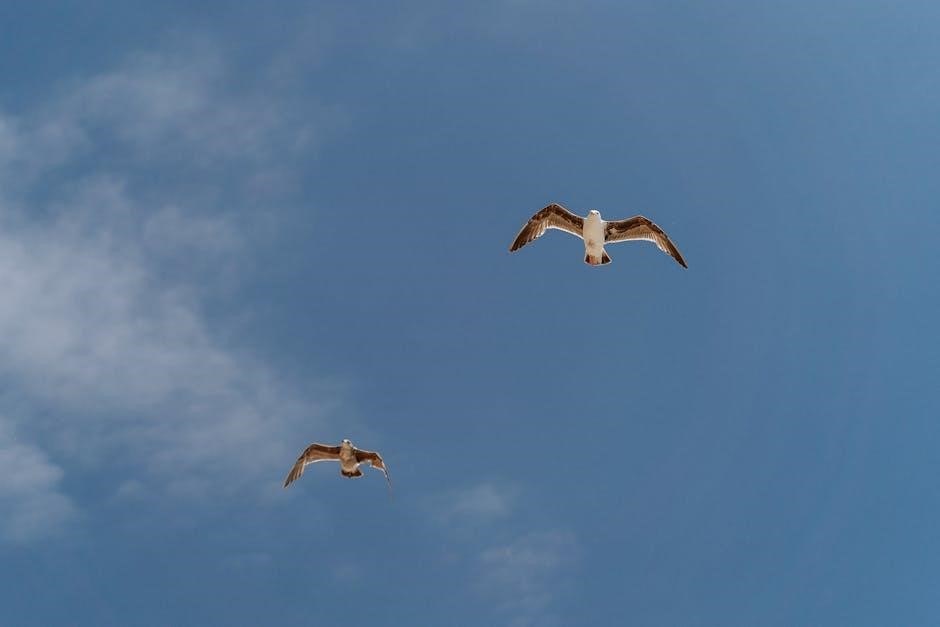
“High Flight” masterfully employs sensory details to immerse the reader in the experience of flight, creating a vivid and emotionally resonant poem. Magee appeals to multiple senses – sight (“sun-kissed” wings), touch (“wind’s soft kiss”), and even a sense of boundless space. Accessing the poem in PDF format allows for close reading, emphasizing these evocative descriptions.
The poem doesn’t merely describe flight; it recreates the sensation of soaring through the heavens. This is achieved through carefully chosen words and phrases that stimulate the imagination. A digital PDF copy facilitates annotation, enabling readers to pinpoint and analyze these sensory details.
Studying the poem via PDF allows for focused examination of how these sensory details contribute to the poem’s overall theme of transcendence and freedom. The poem’s impact lies in its ability to make the reader feel the exhilaration of flight, a sensation powerfully conveyed through its rich sensory language.
“High Flight” and its Spiritual Dimensions
Exploring the poem’s spiritual undertones via PDF reveals Magee’s reconciliation of earthly limits with transcendent curiosity. Digital access aids deeper analysis of his inner struggles and beliefs.
PDF versions facilitate study of how “High Flight” reflects a search for meaning, hinting at a “day in eternity” and transcendental ideals.
Reconciling Spiritual Curiosity with Physical Limits
Accessing “High Flight” in PDF format allows for focused examination of how Magee juxtaposes the tangible experience of flight with profound spiritual questioning. The poem, as noted in analyses, embodies a tension between his “sensitive poet” persona and his “adrenaline junkie” side.
Through the readily available PDF versions, readers can trace how the exhilaration of soaring above the earth becomes a metaphor for transcending earthly constraints and exploring existential themes. Magee’s work, particularly when viewed comprehensively through his letters and other poems – easily accessible in digital collections – demonstrates a consistent grappling with mortality and the search for something beyond the physical realm.
The poem doesn’t simply celebrate flight; it uses it as a vehicle to contemplate the infinite, suggesting a realm where time and limitations dissolve. PDF study aids in understanding how Magee’s personal struggles informed this reconciliation, presenting flight not as an escape from life, but as a pathway towards a deeper understanding of it.
The Poem as a Reflection of Magee’s Inner Struggles
Examining “High Flight” in PDF format reveals how the poem serves as a poignant reflection of John Gillespie Magee Jr.’s internal conflicts. Analyses suggest Magee was a complex individual, simultaneously a contemplative poet and a daring pilot, constantly confronting themes of life and death.
Digital access to the poem, through readily available PDF versions, allows for close reading and identification of subtle nuances hinting at these struggles. The yearning for transcendence expressed in the verses can be interpreted as a desire to reconcile his intellectual curiosity with his penchant for risk-taking and pushing physical boundaries.
The poem’s imagery, easily studied within a PDF document, suggests a soul seeking liberation from earthly “surly bonds,” potentially mirroring Magee’s own attempts to overcome personal anxieties. His broader body of work, accessible in digital archives, further illuminates this internal tension, portraying a man grappling with profound questions about existence and mortality.
Exploring the Concept of “A Day in Eternity”
Within the readily accessible PDF versions of “High Flight,” the phrase “a day in eternity” stands as a central, evocative concept. This line, easily highlighted and analyzed in a digital format, suggests a timeless experience achieved through the exhilaration of flight and spiritual awakening.
The poem, when studied as a PDF document, reveals how Magee uses this phrase to convey a sense of being unbound by temporal constraints, experiencing a moment of profound connection with something larger than oneself. It’s a feeling of complete immersion and freedom, transcending the limitations of earthly existence.
Further exploration of Magee’s letters and other poems, often found in accompanying digital collections alongside the PDF of “High Flight,” reveals this concept as a recurring theme in his work. He sought to capture the feeling of existing outside of time, a fleeting glimpse into the infinite, achieved through both physical and spiritual exploration.
The Poem’s Connection to Transcendentalism
Analyzing “High Flight” in PDF format allows for a focused examination of its philosophical underpinnings, notably its resonance with Transcendentalist ideals. The poem’s emphasis on individual experience, intuition, and the inherent goodness of both people and nature aligns strongly with this 19th-century movement.
The readily available PDF versions facilitate side-by-side comparisons with writings by Transcendentalist figures like Emerson and Thoreau, revealing shared themes of escaping societal constraints and seeking truth through direct experience. Magee’s depiction of soaring above the earth mirrors the Transcendentalist desire to rise above the mundane and connect with the divine.
Furthermore, the poem’s celebration of self-reliance and the pursuit of personal transcendence, easily identifiable within the PDF text, echoes the Transcendentalist belief in the inherent potential of the individual. “High Flight” can be viewed as a modern expression of these enduring philosophical principles, beautifully encapsulated in verse.
Finding and Accessing “High Flight” in PDF Format
Numerous websites offer “High Flight” in PDF, providing easy access for study and enjoyment. Reliable sources ensure legitimate downloads, respecting copyright laws and offering quality versions.
Educational institutions frequently provide PDFs for classroom use, while poetry archives also host digital copies for public access and preservation.
Reliable Sources for PDF Downloads
Locating a trustworthy PDF version of “High Flight” requires careful consideration of source legitimacy. Several online platforms consistently provide reliable access to the poem. Poetry Foundation, a respected literary organization, often hosts downloadable PDFs of classic poems, including Magee’s work, ensuring high-quality formatting and accurate text.
Project Gutenberg, a volunteer effort to digitize and archive cultural works, is another excellent resource, offering free eBooks and PDFs of public domain literature. Many educational websites dedicated to literature and poetry also provide downloadable PDFs for student use, often accompanied by analysis and study guides. Government and military archives may also contain official versions of the poem, particularly relevant given its association with aviation and memorial services.
Always verify the source’s reputation and ensure the PDF is free from malware or viruses before downloading. Checking for clear copyright information and avoiding unofficial or suspicious websites is crucial for a safe and legal download experience. Prioritizing established literary organizations and educational institutions guarantees access to authentic and well-maintained PDF versions of “High Flight”.
Legality and Copyright Considerations
Understanding the copyright status of “High Flight” is essential when accessing and distributing PDF versions. While the poem has entered the public domain in many countries, certain editions or accompanying materials may still be protected by copyright. Generally, the text of the poem itself is freely available for personal use, study, and non-commercial sharing.
However, reproducing the poem in a commercial publication or distributing modified versions without permission could infringe on existing copyrights. Downloading PDFs from reputable sources, like those mentioned previously, minimizes the risk of encountering copyrighted material used without authorization. Always respect the intellectual property rights of authors and publishers.
Educational institutions often have specific guidelines regarding the use of copyrighted materials, even those in the public domain. It’s crucial to adhere to these guidelines when using “High Flight” in academic settings. When in doubt, seeking clarification from a legal professional or copyright expert is advisable to ensure compliance with applicable laws and regulations regarding PDF distribution.
PDF Versions for Educational Purposes
Numerous PDF versions of “High Flight” are specifically tailored for educational use, offering valuable resources for teachers and students. These often include annotations, study guides, and contextual information to enhance comprehension and analysis of the poem’s themes and literary devices. Many educational websites and online archives provide free, downloadable PDFs designed for classroom integration.
These versions frequently feature accompanying lesson plans, discussion questions, and activities to facilitate engaging learning experiences. Some PDFs also incorporate historical context, biographical details about John Gillespie Magee Jr., and critical interpretations of the poem. Teachers can utilize these resources to explore the poem’s enduring legacy and its relevance to aviation, spirituality, and human aspiration.
Furthermore, accessible PDF formats ensure inclusivity for students with visual impairments or learning disabilities. Optimized PDFs with adjustable font sizes and screen reader compatibility promote equitable access to this powerful and inspiring work of literature, fostering a deeper appreciation for poetry and its cultural significance.
Optimizing PDF Viewing and Printing
To ensure the best possible experience when viewing and printing “High Flight” PDFs, several optimization techniques can be employed. Utilizing a reliable PDF reader, such as Adobe Acrobat Reader, allows for seamless navigation and access to advanced features. Adjusting the zoom level can enhance readability, particularly on smaller screens or for individuals with visual impairments.
When printing, selecting the appropriate paper size and orientation is crucial for preserving the poem’s formatting and aesthetic appeal. Choosing a high-quality print resolution guarantees crisp text and clear imagery. Furthermore, utilizing the “Print as Image” option can resolve potential font compatibility issues, ensuring consistent results across different printers.
For enhanced accessibility, consider enabling text selection and reflow options within the PDF reader. These features allow for customizable font sizes and line spacing, catering to individual preferences and reading needs, ultimately maximizing enjoyment and comprehension of Magee’s timeless verse.
The Poem’s Enduring Legacy
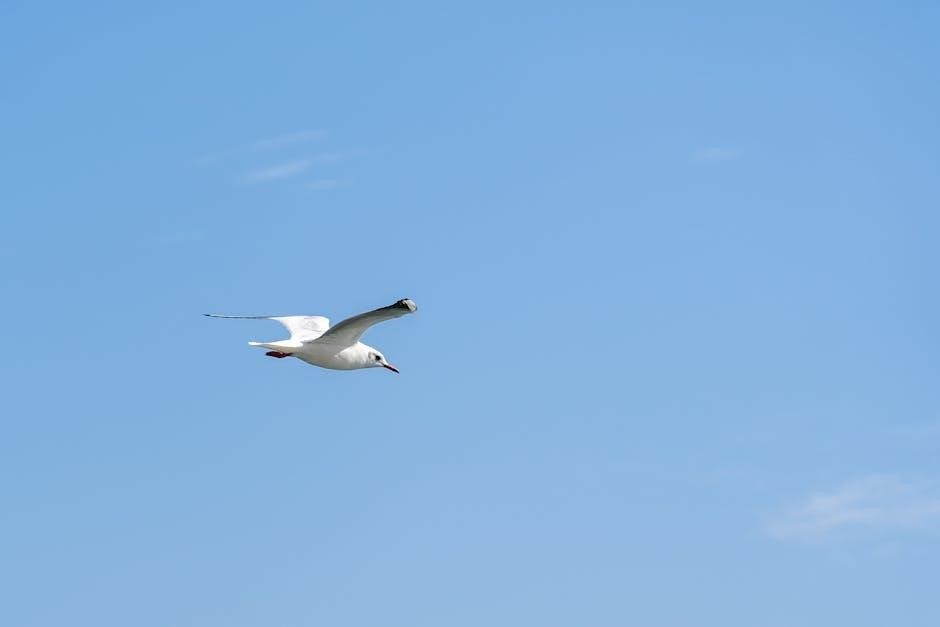
“High Flight” continues to inspire, deeply resonating within aviation and military communities, frequently featured in memorial services. Its PDF accessibility ensures lasting appreciation and scholarly analysis.
The poem’s themes of freedom and transcendence maintain relevance, impacting readers across generations, solidifying its place in literary history.
“High Flight” in Aviation Culture
Within aviation, “High Flight” transcends mere poetry; it’s a cultural touchstone, embodying the spirit of flight and the aspirations of those who take to the skies. The poem’s readily available PDF format has amplified its presence, becoming a staple in flight schools and pilot training programs globally.

Pilots often recite or share the poem before flights, invoking its imagery of freedom and transcendence as a source of inspiration and a reminder of the unique perspective gained from above. Aviation enthusiasts frequently display printed copies in hangars, cockpits, and aviation museums, cementing its status as an unofficial anthem.
The poem’s themes resonate deeply with the inherent risks and rewards of aviation, acknowledging the “surly bonds” of Earth while celebrating the exhilaration of breaking free. Its accessibility through PDF downloads ensures that new generations of aviators can connect with Magee’s powerful words, perpetuating its legacy within the aviation community and beyond.
Furthermore, the poem’s concise and evocative language makes it easily memorized and shared, fostering a sense of camaraderie among those who share a passion for flight.
Use in Military and Memorial Services
“High Flight” holds a particularly poignant place within military and memorial contexts, frequently featured in ceremonies honoring fallen service members, especially pilots. The poem’s themes of courage, sacrifice, and achieving a higher purpose deeply resonate with the experiences and ideals of those who serve.
Its readily available PDF format facilitates its inclusion in memorial programs, orders of service, and remembrance materials, ensuring widespread access for attendees. The poem’s imagery of soaring “on thermals” and touching “the face of God” offers a comforting and uplifting message of transcendence and eternal peace.
Military academies and training facilities often incorporate “High Flight” into their curricula, using it to instill a sense of duty, honor, and the pursuit of excellence. The poem’s enduring popularity in these settings speaks to its ability to capture the essence of the military ethos and provide solace during times of grief and remembrance.
The digital accessibility of the PDF version allows for easy distribution and personalization, making it a meaningful tribute for families and loved ones;
The Poem’s Impact on Readers Today
“High Flight” continues to captivate readers in the 21st century, its message of freedom and transcendence remaining remarkably relevant despite advancements in aviation technology. The poem’s accessibility, particularly through readily available PDF versions, ensures its continued circulation and appreciation across generations.
Modern readers often connect with the poem’s underlying spiritual themes, interpreting the “silent halls of heaven” as a metaphor for personal growth and the pursuit of meaning. The PDF format allows for convenient sharing and study, fostering discussions about the poem’s enduring power and universal appeal.
While the context of flight has evolved, the poem’s core message of pushing boundaries and striving for something greater resonates with individuals from all walks of life. Its concise and evocative language continues to inspire awe and wonder, prompting reflection on the human spirit’s capacity for exploration and self-discovery.
The poem’s digital presence ensures its legacy endures, offering a timeless message of hope and inspiration to readers worldwide.
Critical Interpretations and Scholarly Analysis
Scholarly analysis of “High Flight” often centers on its skillful use of the sonnet form and its exploration of themes like freedom, transcendence, and the human desire to overcome limitations. Access to the poem via PDF facilitates close reading and textual analysis for academic purposes.
Critics note the poem’s romantic sensibility and its connection to Transcendentalist ideals, particularly the emphasis on intuition and the inherent goodness of humanity. The readily available PDF format allows researchers to easily quote and reference the text in their studies.

Interpretations also delve into the biographical context of John Gillespie Magee Jr., examining how his experiences as a pilot and his personal struggles informed the poem’s themes. Digital access to the poem, through PDFs, complements biographical research, offering a direct link to Magee’s artistic expression.
Furthermore, analysis considers the poem’s enduring appeal within aviation culture and its use in memorial services, highlighting its symbolic power and emotional resonance.