Lower limb strengthening is crucial for overall functional movement, impacting daily activities and athletic performance. Protocols, as studied in recent reviews (2024-02-15), demonstrate effectiveness for inactive individuals.
This guide explores various exercises, considering factors like muscle contraction types – isometric versus isokinetic – particularly relevant for conditions like knee osteoarthritis (KOA) (2024-09-12).
Understanding the benefits and appropriate implementation, including warm-up/cool-down (10 minutes each) and session duration (45-60 minutes), is key to achieving optimal results (2021).
Importance of Lower Limb Strength
Robust lower limb strength is foundational for a multitude of physical functions, extending far beyond simply being able to walk or run. It directly impacts balance, stability, and the ability to perform everyday tasks with ease and confidence. A decline in lower limb strength is often a precursor to falls, particularly in aging populations, highlighting its preventative role in maintaining independence.
Recent research (2024-02-15) emphasizes the significant benefits of targeted strengthening protocols, even for previously sedentary individuals. Improved muscle activity, strength, and power translate to enhanced functional capacity and a better quality of life; For those with conditions like knee osteoarthritis (KOA), strengthening exercises are not merely supportive, but actively contribute to pain reduction and improved joint function (2024-09-12).
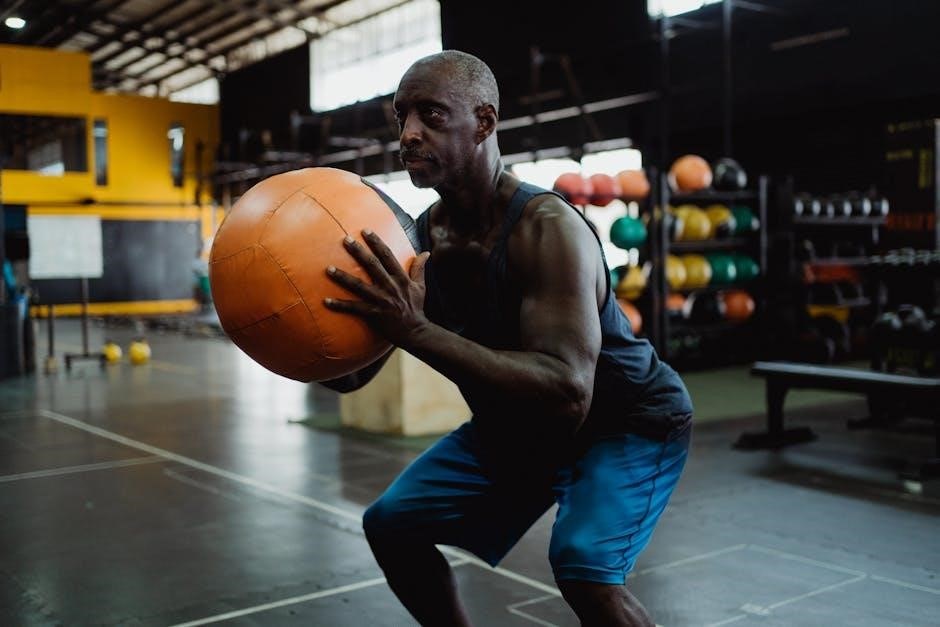
Furthermore, studies (2021) demonstrate a positive correlation between lower limb strengthening and improvements in body mass index (BMI), particularly in overweight or obese individuals. This suggests a role in metabolic health and weight management. Effective protocols, incorporating warm-up and cool-down phases, alongside progressive overload, are essential for maximizing these benefits and minimizing the risk of injury.
Target Audience for this Guide
This comprehensive guide is designed to be accessible and beneficial for a broad spectrum of individuals seeking to improve their lower limb strength and overall physical function. It caters specifically to those who are currently sedentary or physically inactive, providing foundational exercises and protocols to initiate a safe and effective strengthening program (2024-02-15).
Individuals managing knee osteoarthritis (KOA) will find tailored exercise recommendations, differentiating between isometric and isokinetic approaches, informed by recent systematic reviews and network meta-analyses (2024-09-12). The guide also addresses the unique needs of overweight or obese individuals, outlining how lower limb strengthening can positively impact BMI and improve mobility.
Healthcare professionals, including physical therapists and trainers, can utilize this resource to develop individualized exercise plans for their clients. Moreover, anyone interested in preventative care, athletic performance enhancement, or simply maintaining an active lifestyle will find valuable information regarding warm-up routines, progressive overload principles, and appropriate exercise selection (2021).
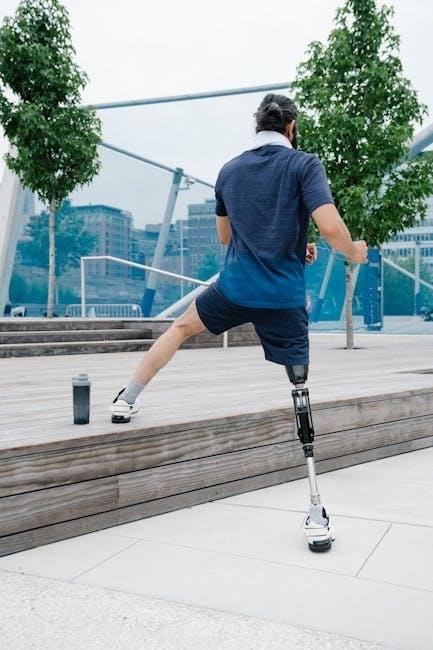
Understanding Lower Limb Muscles
Effective strengthening requires knowledge of key muscle groups: quadriceps, hamstrings, glutes, and calves. Targeted exercises, informed by research (2024-02-15), optimize function and address specific needs.
Key Muscle Groups: Quadriceps
The quadriceps femoris, located on the front of the thigh, are vital for knee extension and overall lower limb function. Comprising the rectus femoris, vastus lateralis, vastus medialis, and vastus intermedius, these muscles play a critical role in activities like walking, running, and squatting.
Strengthening the quadriceps is particularly important for individuals with knee osteoarthritis (KOA), as strong quads help stabilize the joint and reduce pain. Research (2024-09-12) indicates that both isometric and isokinetic exercises can be beneficial, though isokinetic may offer superior pain relief and functional improvement.
For sedentary or physically inactive individuals, quadriceps strengthening is essential for regaining lost muscle mass and improving mobility. Protocols focusing on progressive overload (2024-02-15) are crucial, starting with bodyweight exercises and gradually incorporating resistance bands or weights. Proper form is paramount to prevent injury and maximize effectiveness. Consistent training, combined with appropriate warm-up and cool-down routines (2021), will yield significant improvements in quadriceps strength and function.
Addressing quadriceps weakness contributes to enhanced lower limb stability and reduced risk of falls, particularly important for older adults and those recovering from injury.
Key Muscle Groups: Hamstrings
The hamstring muscle group, located on the back of the thigh, consists of the biceps femoris, semitendinosus, and semimembranosus. These muscles are crucial for knee flexion and hip extension, working in synergy with the quadriceps to control lower limb movement.
Hamstring strength is often overlooked, yet it’s vital for preventing injuries, particularly ACL tears. Strengthening these muscles provides dynamic stability to the knee joint, especially important during activities involving rapid changes in direction. Protocols for sedentary individuals (2024-02-15) should prioritize balanced development of both quads and hamstrings.
For individuals with KOA (2024-09-12), hamstring strengthening complements quadriceps exercises, contributing to overall knee stability and reduced pain. Exercises should be implemented cautiously, focusing on controlled movements and avoiding overstretching. Progressive overload is key, starting with bodyweight exercises and gradually adding resistance.
A comprehensive lower limb strengthening program (2021) incorporates a 10-minute warm-up before and cool-down after a 45-60 minute session, ensuring optimal muscle preparation and recovery. Consistent training enhances hamstring strength, improving functional performance and reducing injury risk.
Key Muscle Groups: Glutes & Calves
The gluteal muscles – gluteus maximus, medius, and minimus – are essential for hip extension, abduction, and rotation, providing power and stability during locomotion. Strong glutes contribute to proper alignment, reducing stress on the knees and lower back. Integrating glute-focused exercises is vital for all fitness levels, particularly for those previously sedentary (2024-02-15).
Alongside the glutes, the calf muscles (gastrocnemius and soleus) are crucial for plantarflexion of the foot, enabling walking, running, and jumping. Strengthening these muscles improves ankle stability and power output. For individuals with KOA (2024-09-12), calf raises can enhance balance and reduce compensatory movements.
A well-rounded lower limb strengthening program (2021) addresses both glutes and calves, ensuring balanced muscle development. Protocols should include exercises like squats, lunges, and calf raises, progressing from bodyweight to weighted variations. A 10-minute warm-up and cool-down are essential components of each 45-60 minute session.
Prioritizing glute and calf strength improves overall lower limb function, enhancing athletic performance and reducing the risk of injuries. Consistent training and progressive overload are key to achieving lasting results.
Types of Lower Limb Strengthening Exercises
Lower limb strengthening encompasses bodyweight, resistance band, and weighted exercises. Protocols vary based on individual needs and conditions, like KOA, utilizing isometric or isokinetic contractions (2024-09-12).
Bodyweight Exercises
Bodyweight exercises represent a foundational approach to lower limb strengthening, requiring no equipment and offering accessibility for diverse fitness levels, particularly beneficial for sedentary individuals (2024-02-15). These exercises leverage your own weight as resistance, promoting functional strength and stability.
Fundamental movements include squats, targeting the quadriceps, hamstrings, and glutes. Lunges, both forward and reverse, further isolate these muscle groups while enhancing balance and coordination. Calf raises effectively strengthen the gastrocnemius and soleus muscles, crucial for ankle stability and propulsion.
For beginners, modified versions like wall sits or assisted squats can reduce intensity. Progressions involve increasing repetitions, sets, or incorporating variations like jump squats or Bulgarian split squats. These exercises are easily integrated into a 45-60 minute session (2021), following a proper warm-up and cool-down routine.
Bodyweight training is particularly valuable as a starting point before introducing external resistance, building a solid base of strength and preparing the muscles for more challenging exercises. Consistent practice is key to achieving noticeable improvements in lower limb strength and function.
Resistance Band Exercises
Resistance band exercises offer a versatile and cost-effective method for lower limb strengthening, providing variable resistance throughout the range of motion. They are particularly useful for individuals beginning a strengthening program, including those who are sedentary or physically inactive (2024-02-15), and can be easily incorporated into rehabilitation protocols.
Exercises like banded squats and lunges increase the challenge to the quadriceps, hamstrings, and glutes. Lateral band walks effectively target the gluteus medius, improving hip stability. Banded hip extensions strengthen the glutes, while ankle dorsiflexion and plantarflexion exercises enhance calf muscle strength.
The resistance level can be adjusted by selecting bands of varying thickness or by changing the amount of stretch applied to the band. These exercises fit well within a 45-60 minute session (2021), following a warm-up and cool-down. They are also suitable for individuals with knee osteoarthritis (KOA), potentially offering a gentler alternative to weighted exercises.
Resistance bands are portable and convenient, allowing for effective lower limb strengthening exercises to be performed virtually anywhere, making them an excellent option for maintaining fitness on the go.
Weighted Exercises (Dumbbells, Barbells)
Weighted exercises, utilizing dumbbells and barbells, provide a significant challenge for lower limb strengthening, promoting substantial gains in muscle strength and power. These are best suited for individuals with a foundational level of fitness, building upon bodyweight and resistance band exercises.
Exercises such as barbell squats, lunges, and deadlifts effectively target the quadriceps, hamstrings, and glutes. Dumbbell variations, like goblet squats and Romanian deadlifts, offer increased versatility and can address muscle imbalances. Calf raises with added weight enhance calf muscle development.
Progressive overload is crucial when incorporating weights, gradually increasing the load to continually challenge the muscles. Proper form is paramount to prevent injuries, especially for those with pre-existing conditions like knee osteoarthritis (KOA) (2024-09-12). These exercises should be integrated into a structured 45-60 minute session (2021), following a thorough warm-up and cool-down.
For overweight or obese individuals, a carefully monitored approach is essential, considering the impact on body mass index (BMI) and joint stress. Weighted exercises, when performed correctly, can contribute to improved strength and functional capacity.
Exercise Protocols & Considerations
Effective protocols involve a 10-minute warm-up and cool-down, with 45-60 minute sessions. Progressive overload is key, adapting to individual needs, especially for sedentary or KOA patients (2021, 2024).
Warm-up and Cool-down Procedures (10-minute routines)
Prior to lower limb strengthening, a 10-minute warm-up is essential to prepare muscles for exertion and minimize injury risk. This should include low-intensity cardiovascular activity, such as marching in place or light jogging, to increase blood flow to the targeted muscle groups.
Dynamic stretching is also crucial, incorporating movements like leg swings (forward, backward, and sideways), hip circles, and torso twists. These movements enhance range of motion and flexibility, preparing the joints for the demands of the workout. Focus on controlled movements, avoiding bouncing or jerky motions.
Following the strengthening exercises, a 10-minute cool-down is equally important. This should begin with low-intensity cardiovascular activity, gradually decreasing heart rate and blood pressure. Static stretching, holding each stretch for 20-30 seconds, should then be performed, targeting the quadriceps, hamstrings, glutes, and calves.
Examples include hamstring stretches (seated or standing), quadriceps stretches (standing, pulling the heel towards the glutes), calf stretches (leaning against a wall), and glute stretches (figure-four stretch). Proper cool-down aids in muscle recovery, reduces soreness, and improves flexibility, contributing to long-term benefits (2021).
Repetition and Set Guidelines (45-60 minute sessions)
For effective lower limb strengthening within a 45-60 minute session, a structured approach to repetitions and sets is vital. Beginners should start with 2-3 sets of 10-12 repetitions for each exercise, focusing on proper form over lifting heavy weights. As strength improves, gradually increase the number of sets to 3-4, and consider increasing repetitions to 12-15.
Rest periods between sets should be between 60-90 seconds to allow for adequate muscle recovery. When using weighted exercises, select a weight that challenges the muscles without compromising form. Progressive overload – gradually increasing the weight, repetitions, or sets – is key to continued improvement.
For sedentary or physically inactive individuals, starting with bodyweight exercises is recommended before progressing to resistance bands or weights. Focus on mastering the movement pattern before adding resistance. Session duration can be adjusted based on individual fitness levels, but consistency is paramount.
Remember to listen to your body and avoid pushing through pain. Proper technique and gradual progression are essential for maximizing results and minimizing the risk of injury (2024-02-15, 2021).
Progressive Overload Principles
Progressive overload is the cornerstone of any effective lower limb strengthening program. It involves gradually increasing the demands placed on the muscles over time, prompting continued adaptation and strength gains. This isn’t simply about adding weight; it encompasses several variables.
These variables include increasing the resistance (weight), the number of repetitions, the number of sets, or decreasing the rest time between sets. For instance, if you can comfortably perform 12 repetitions with a given weight, increase the weight slightly for the next session;
For individuals with knee osteoarthritis (KOA), progressive overload should be implemented cautiously, prioritizing pain management and functional improvement. Isokinetic exercises, shown to be more effective than isometric in some studies (2024-09-12), can be progressively increased in speed or resistance.
Similarly, for sedentary individuals, start with bodyweight exercises and gradually introduce resistance bands or light weights. Consistent application of progressive overload, combined with proper form and adequate recovery, is crucial for long-term success (2024-02-15, 2021).
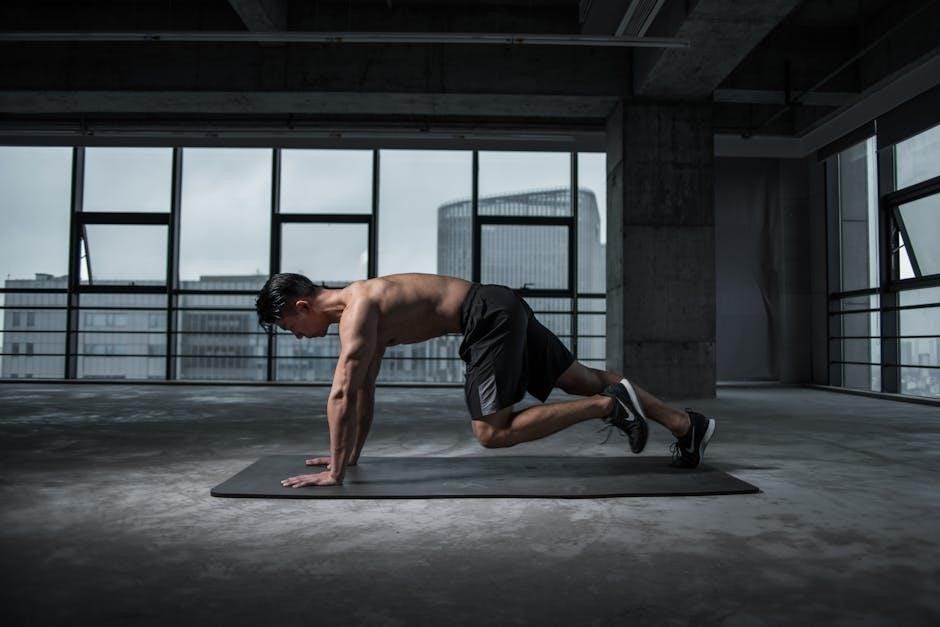
Specific Exercises for Common Conditions
Targeted exercises address unique needs; isokinetic training benefits KOA more than isometric (2024-09-12). Sedentary individuals benefit from gradual progression, while overweight patients see BMI impact (2021).
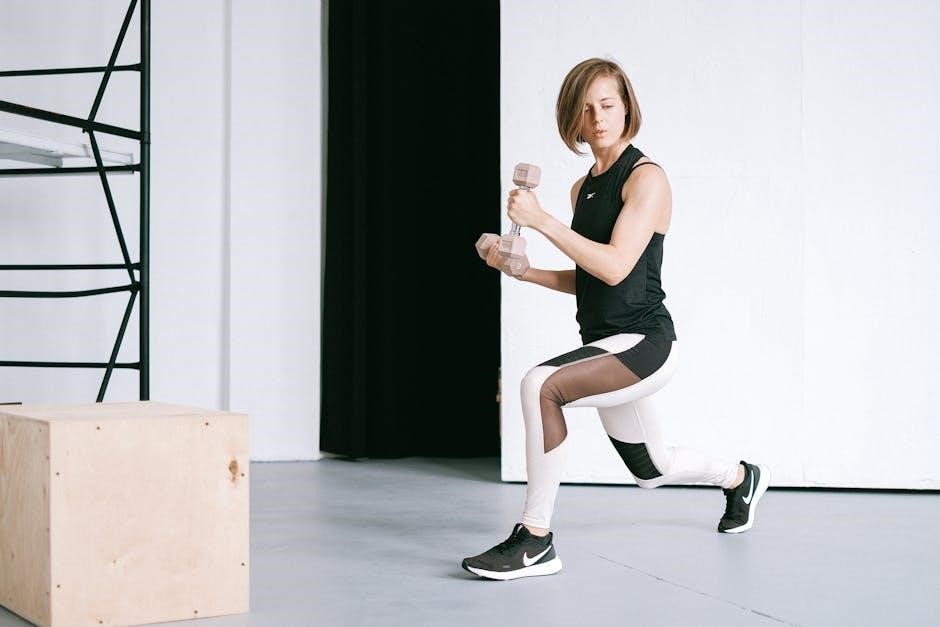
Exercises for Knee Osteoarthritis (KOA) ౼ Isometric vs. Isokinetic
Knee Osteoarthritis (KOA) management significantly benefits from targeted lower limb strengthening. However, the optimal contraction type – isometric or isokinetic – remains a subject of debate, as highlighted by conflicting findings from Salli et al. and Çakır et al; (2024-09-12).
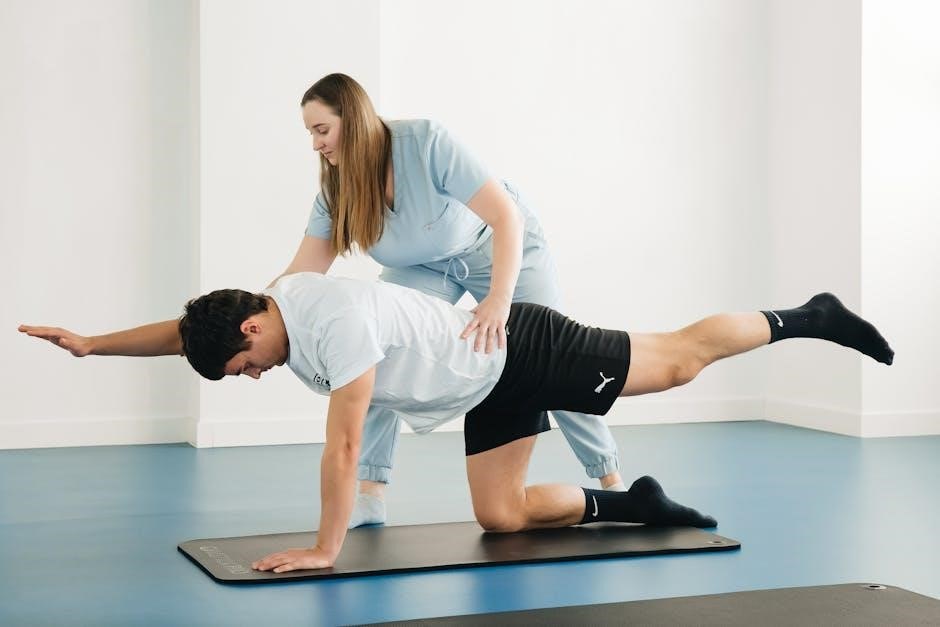
Isometric exercises involve muscle contraction without joint movement, focusing on endurance and stability. Examples include quadriceps sets and hamstring contractions performed against resistance, ideal for early-stage KOA to minimize joint stress. These build foundational strength without exacerbating pain.
Isokinetic exercises utilize specialized equipment to maintain a constant speed throughout the range of motion. Research suggests isokinetic exercise demonstrates superior efficacy in alleviating pain and enhancing functional capacity compared to isometric training (2024-09-12). This is due to its ability to address strength deficits across the entire movement arc.
A network meta-analysis is crucial for comprehensive comparison, providing a robust reference for clinical decision-making. A tailored approach, potentially starting with isometric exercises and progressing to isokinetic as tolerated, offers the most promising outcome for individuals with KOA.
Exercises for Sedentary/Inactive Individuals
Individuals leading sedentary lifestyles often experience significant declines in lower limb strength, impacting mobility and increasing fall risk. A systematic review emphasizes the importance of targeted strengthening protocols to address these deficits (2024-02-15). Initial exercises should prioritize accessibility and low impact.
Bodyweight exercises are an excellent starting point. These include seated leg extensions, calf raises, and partial squats, focusing on controlled movements and proper form. Begin with a limited range of motion, gradually increasing as strength improves. Chair-assisted exercises provide added stability.
Resistance band exercises offer a versatile and adaptable progression. Bands provide variable resistance, allowing for customized intensity. Examples include band walks, hip abductions, and hamstring curls. These are easily incorporated into a home exercise program.
Progressive overload is key. Start with fewer repetitions and sets, gradually increasing the volume and intensity as tolerated. Consistency is paramount; aim for at least two to three sessions per week to achieve meaningful improvements in strength and function.
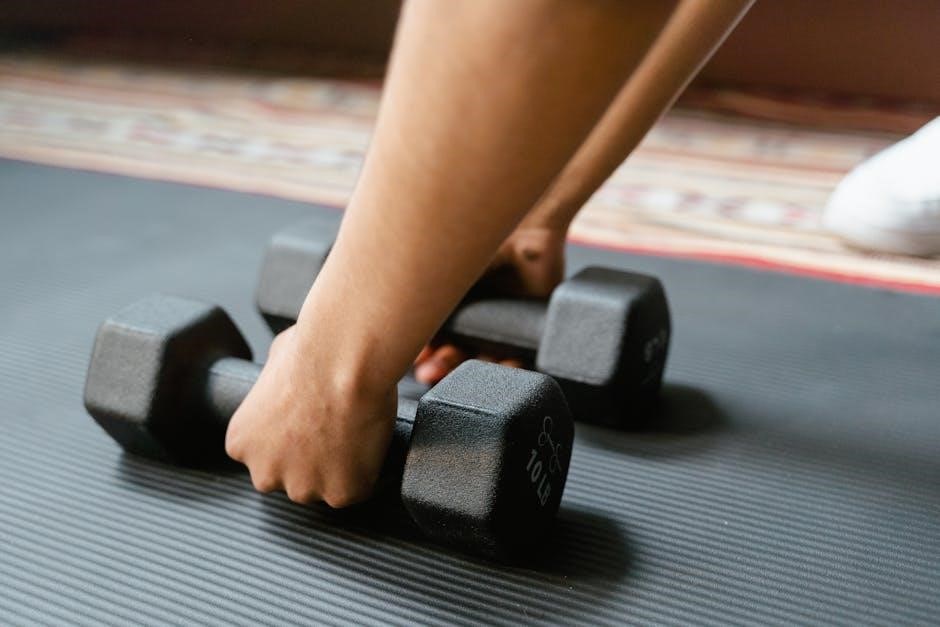
Exercises for Overweight/Obese Individuals ⸺ Impact on BMI
Lower limb strengthening is particularly beneficial for overweight and obese individuals, contributing to improved metabolic health and functional capacity. A clinical trial demonstrated that strengthening exercises can positively influence body mass index (BMI) alongside improvements in pain and physical function (2021).
Low-impact exercises are crucial to minimize stress on joints. Water aerobics and stationary cycling are excellent options, providing cardiovascular benefits alongside muscle strengthening. Modified squats and lunges, performed with careful attention to form, can also be incorporated.
Resistance training should be progressive, starting with lighter weights or resistance bands. Focus on compound movements like squats, lunges, and step-ups to engage multiple muscle groups simultaneously. Prioritize proper technique to prevent injuries.
Combining lower limb strengthening with dietary modifications can maximize the impact on BMI reduction. A comprehensive approach, including a structured exercise program and a balanced diet, yields the most sustainable results. Regular monitoring of progress is essential.