Understanding Quadriceps Strains
Quadriceps strains occur due to muscle imbalances, poor conditioning, or overexertion, often benefiting from a structured physical therapy program for optimal recovery.
What is a Quadriceps Strain?
A quadriceps strain represents damage to the muscles located at the front of the thigh, frequently occurring during activities demanding quick starts, stops, and jumping. These strains range in severity, from minor overstretching to complete muscle tears. The quadriceps muscle group, comprised of the rectus femoris, vastus lateralis, vastus medialis, and vastus intermedius, works in synergy with the hamstrings for balanced leg function.
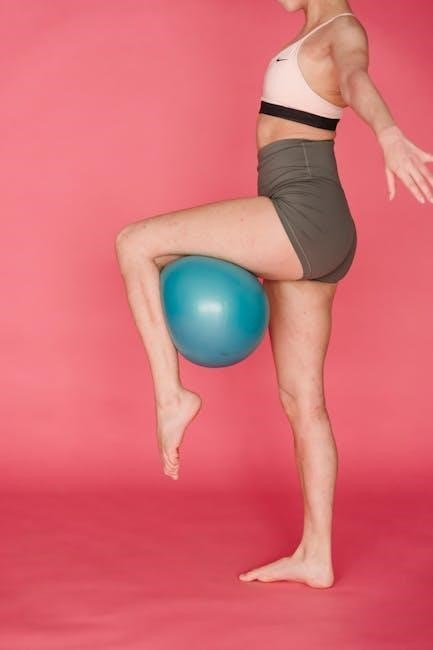
When one muscle group is significantly weaker, the opposing muscle becomes susceptible to strain. Poor conditioning and rapidly increasing exercise intensity also contribute to injury risk. Effective rehabilitation, often guided by a physical therapist, focuses on restoring muscle length, strength, and control, minimizing re-injury potential, and improving technique.
Causes of Quadriceps Strains
Several factors contribute to quadriceps strains, often stemming from imbalances between the quadriceps and hamstrings. If one muscle group is stronger, the weaker one is prone to injury. Poor conditioning significantly increases risk, as weak muscles struggle to handle exercise stress. A common cause is “doing too much too soon,” rapidly escalating exercise duration or intensity before the body adapts.
Sudden movements like sprinting, jumping, or kicking can also trigger strains. Inadequate warm-up routines and insufficient flexibility further elevate susceptibility. A comprehensive rehabilitation program, guided by a physical therapist, addresses these underlying causes, focusing on strengthening, flexibility, and proper technique to prevent recurrence and ensure a safe return to activity.
Grading of Quadriceps Strains (Severity)
Quadriceps strains are categorized into grades based on the extent of muscle fiber damage. Grade I strains involve mild discomfort, minimal loss of strength, and no noticeable swelling. Athletes can usually continue activity with modification. Grade II strains present with more significant pain, moderate weakness, and some swelling, limiting function.
Grade III strains are severe, characterized by intense pain, substantial weakness, visible swelling, and potential bruising. These often involve a complete or near-complete muscle tear, requiring immobilization and extensive rehabilitation. Accurate grading, often performed by a physical therapist, is crucial for determining the appropriate treatment plan and guiding the recovery process, ensuring a safe and effective return to activity.
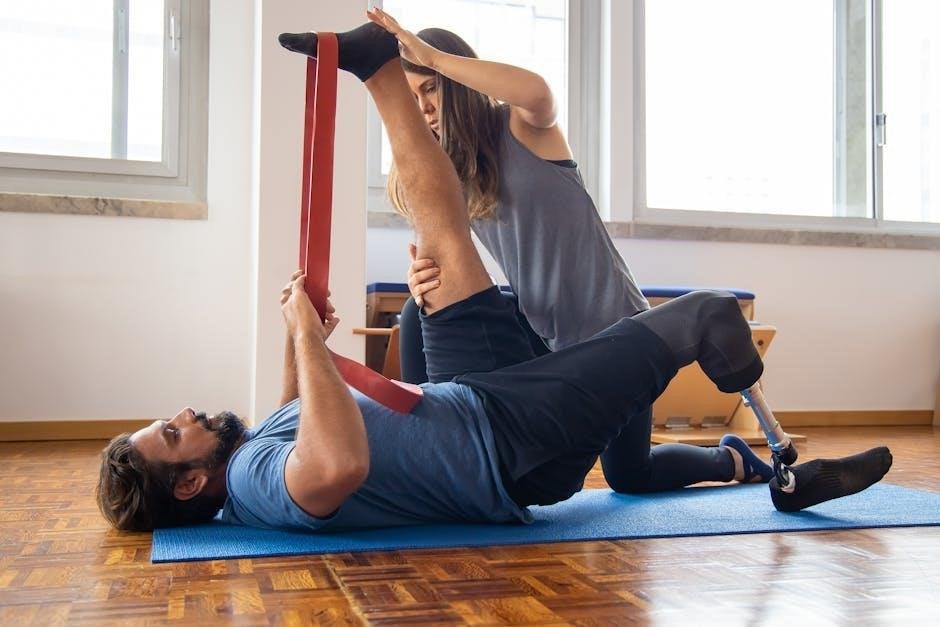
Initial Management & Phase 1 Rehab (0-72 Hours)
RICE – Rest, Ice, Compression, and Elevation – is paramount in the initial phase, protecting healing tissues and minimizing swelling post-injury.
RICE Protocol (Rest, Ice, Compression, Elevation)
Rest immediately halts activity to prevent further damage, allowing initial healing to begin. Ice application, for 15-20 minute intervals every 2-3 hours, reduces pain and inflammation. Compression, using an elastic bandage, minimizes swelling, ensuring it’s not too tight to restrict circulation.
Elevation, positioning the injured leg above heart level, further aids in reducing swelling by promoting fluid drainage. This combined approach, the RICE protocol, is crucial in the first 72 hours following a quadriceps strain. It focuses on controlling inflammation and pain, creating a foundation for subsequent rehabilitation phases. Adhering to this protocol is vital for a safe and efficient recovery process, minimizing the risk of re-injury and facilitating a return to activity.
Pain Management Strategies
Beyond the initial RICE protocol, effective pain management is essential for quadriceps strain recovery. Over-the-counter pain relievers, like ibuprofen or naproxen, can help reduce inflammation and discomfort, allowing for better participation in rehabilitation. Gentle range-of-motion exercises, initiated cautiously, can also alleviate stiffness and pain.
However, it’s crucial to avoid activities that significantly increase pain. A physical therapist can guide you through appropriate exercises and techniques, ensuring a safe progression. They may employ modalities like ultrasound or electrical stimulation to further manage pain and promote healing. Prioritizing pain control enables consistent engagement in rehab, accelerating recovery and minimizing the risk of developing chronic pain issues.
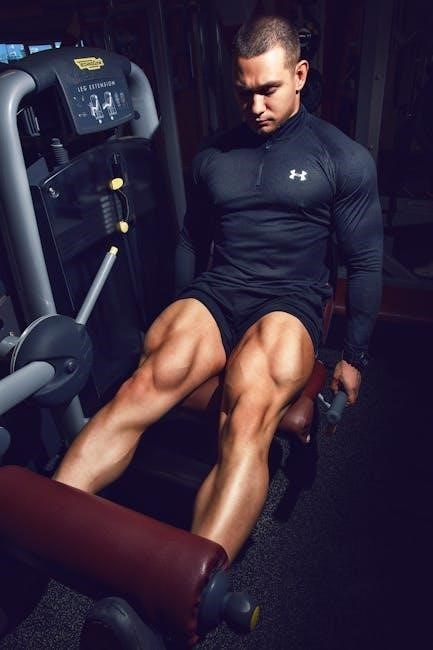
Phase 2 Rehab (Days 3-14: Gentle Motion & Activation)
This phase focuses on restoring motion and activating the quadriceps through exercises like quad sets and knee terminal extensions, promoting early healing.
Quadriceps Sets
Quadriceps sets are a foundational exercise in early rehabilitation, crucial for activating the quadriceps muscle without significant joint movement. To perform this exercise, lie on your back with your injured leg extended, and a rolled towel placed under your knee. Focus on tightening your quadriceps muscle, pressing the back of your knee firmly into the towel.
Hold this contraction for approximately ten seconds, maintaining a controlled squeeze. Repeat this process for two sets of ten repetitions. This isometric contraction helps to regain muscle control and initiate the healing process. It’s important to avoid any pain during the exercise; adjust the intensity as needed. The ankle should be flexed throughout the exercise to further isolate the quadriceps. Consistent performance of quad sets aids in reducing muscle inhibition and preparing for more dynamic movements.
Knee Terminal Extension Strengthening
Knee terminal extension strengthening focuses on regaining full knee extension, a common deficit following a quadriceps strain. Lie on your back with your affected leg extended and a rolled towel positioned under your knee. Maintain ankle flexion throughout the exercise. The goal is to actively straighten your knee as much as possible, pushing the back of your knee down into the towel.
Concentrate on contracting your quadriceps to achieve full extension, holding this position for ten seconds. Perform two sets of ten repetitions, ensuring a controlled movement. This exercise helps restore the muscle’s ability to fully extend the knee joint, which is vital for functional activities. Avoid pushing through pain; modify the range of motion if needed. This exercise is a key component in rebuilding strength and control.
Standing Quadriceps Stretch (Behind Chair)
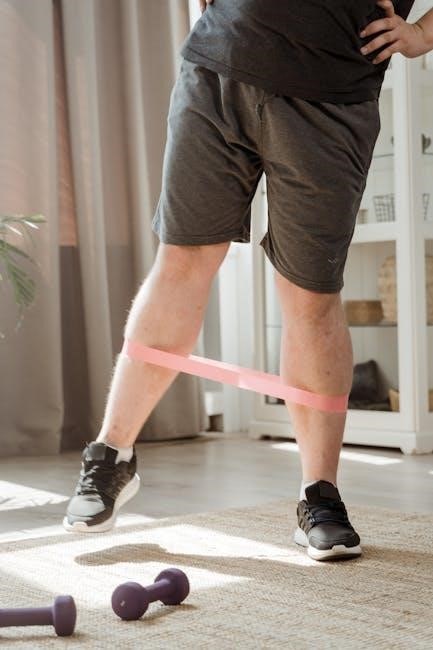
The standing quadriceps stretch, performed using a chair for support, effectively improves flexibility in the quadriceps muscle group. Stand upright and hold onto a chair for balance. Bend your affected knee, bringing your heel towards your buttock. Reach back with the same-side hand and gently grasp your foot or ankle.
Pull your heel closer to your buttock, feeling a stretch along the front of your thigh. Maintain a neutral spine and avoid arching your back. Hold this stretch for thirty seconds, repeating it three times on each leg. This stretch helps restore normal muscle length, reducing tightness and improving range of motion. Consistent stretching is crucial for preventing re-injury and optimizing performance.
Phase 3 Rehab (Weeks 2-4: Strength & Endurance)
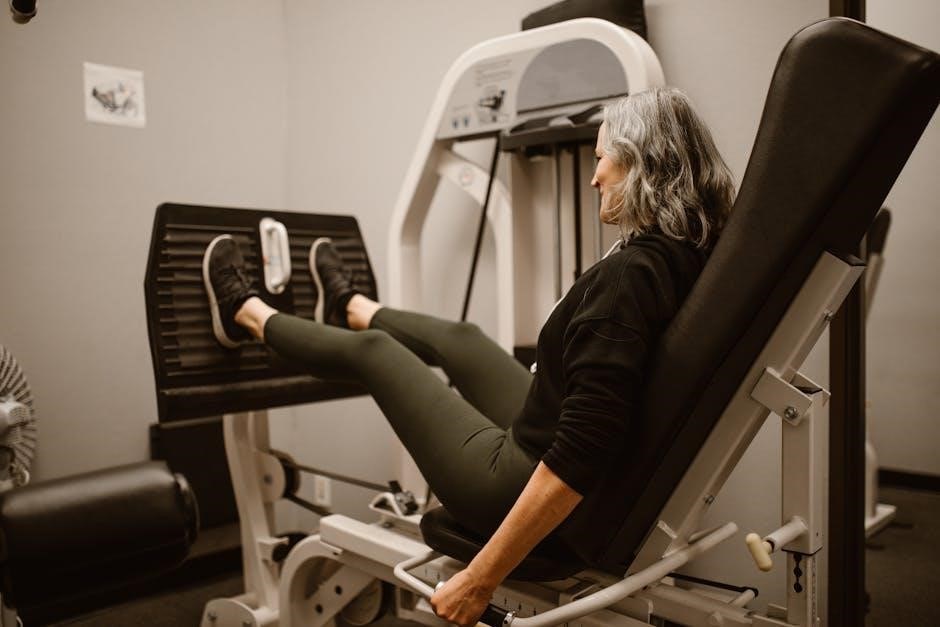
Weeks two to four focus on rebuilding strength and endurance with exercises like short arc quads, straight leg raises, and introductory wall sits.
Short Arc Quads
Short arc quadriceps exercises are a cornerstone of phase three rehabilitation, typically implemented between weeks two and four post-injury. This exercise aims to strengthen the quadriceps muscle without fully extending the knee, protecting the healing tissue and minimizing stress on the repaired area.
To perform this exercise, lie on your back with a rolled towel or bolster placed under your knee. Slowly tighten your quadriceps muscle, pressing the back of your knee down into the towel. Hold this contraction for approximately ten seconds, then slowly release. Repeat this process for ten repetitions, completing two sets.
Focus on isolating the quadriceps muscle and maintaining proper form throughout the exercise. As strength improves, you can gradually increase the resistance by using a heavier towel or adding ankle weights, always under the guidance of a physical therapist. This exercise is crucial for restoring quadriceps strength and preparing for more advanced functional movements.
Straight Leg Raises
Straight leg raises are a fundamental exercise in quadriceps rehabilitation, typically introduced during the strength and endurance phase (weeks 2-4). This exercise effectively activates the quadriceps muscle while minimizing stress on the injured area, promoting controlled strengthening and improved neuromuscular control.
To perform a straight leg raise, lie flat on your back with one leg bent at the knee and the other leg extended straight. Tighten the quadriceps muscle of the extended leg and slowly lift it approximately six to twelve inches off the ground, keeping the knee straight. Hold this position for a few seconds, then slowly lower the leg back down.

Complete ten to fifteen repetitions for two to three sets. Focus on maintaining proper form and avoiding any pain. As strength increases, consider adding ankle weights for increased resistance, always under the supervision of a qualified physical therapist.
Wall Sits (Early Stage)
Wall sits, initiated during the strength and endurance phase (weeks 2-4), are a valuable exercise for building quadriceps strength and endurance with controlled loading. This exercise is particularly beneficial for individuals recovering from a quadriceps strain as it minimizes stress on the healing tissues.
To perform a wall sit, stand with your back flat against a wall, feet shoulder-width apart and slightly away from the wall. Slowly slide down the wall, bending your knees to approximately a 45-60 degree angle, ensuring your thighs are parallel to the ground.
Hold this position for ten to thirty seconds, gradually increasing the duration as strength improves. Complete two to three sets with rest periods in between. Avoid descending too low, which could exacerbate pain. Proper form and controlled movement are crucial for safe and effective rehabilitation.

Phase 4 Rehab (Weeks 4-6: Functional Strengthening)
Functional strengthening focuses on exercises like step-ups and controlled lunges, alongside hamstring work, to restore activity-specific strength and prevent re-injury.
Step-Ups
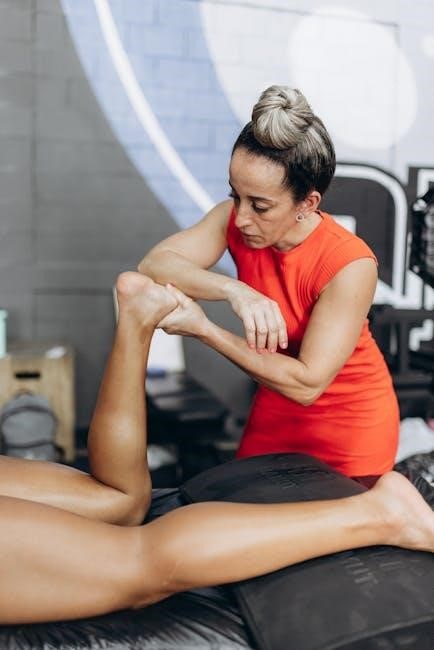
Step-ups are a fantastic exercise for rebuilding quadriceps strength and improving functional movement patterns during the later stages of rehabilitation. Begin with a low step height – around 6-8 inches – and gradually increase it as your strength improves. Focus on controlled movements, ensuring your knee tracks directly over your foot during the ascent.
Avoid letting your knee cave inwards. The goal is to use the injured leg to perform the majority of the work, while the non-injured leg assists for balance. Start with 2-3 sets of 8-12 repetitions on each leg. As you progress, you can add light weights (dumbbells or a weight vest) to increase the challenge. Proper form is paramount; prioritize quality over quantity to prevent re-injury and maximize the benefits of this exercise.
Lunges (Controlled)
Controlled lunges are crucial for restoring functional strength and stability to the quadriceps and surrounding muscles following a strain. Begin with static lunges, holding the bottom position for a few seconds to enhance muscle endurance. Ensure your front knee doesn’t extend past your toes and maintain an upright torso;
As strength improves, progress to dynamic lunges, performing controlled forward or reverse steps. Focus on smooth, deliberate movements, avoiding any bouncing or jerking. Start with 2-3 sets of 8-12 repetitions per leg. Maintaining balance is key; use a wall or chair for support if needed. Lunges help rebuild strength, improve proprioception, and prepare the leg for more demanding activities.
Hamstring Strengthening (Importance of Balance)
Hamstring strengthening is vital during quadriceps strain rehabilitation, as a strength imbalance can contribute to re-injury. The quadriceps and hamstrings work synergistically; neglecting the hamstrings can hinder full recovery and functional return. Exercises like hamstring curls, bridges, and Romanian deadlifts help restore strength and flexibility.
Focus on controlled movements and proper form to avoid compensating with other muscle groups. Aim for 2-3 sets of 10-15 repetitions for each exercise. Strengthening the hamstrings improves knee stability, reduces stress on the quadriceps tendon, and promotes balanced muscle function. A balanced strength profile is essential for preventing future strains and optimizing athletic performance.

Return to Activity & Prevention
Returning to activity requires a gradual progression guided by a physical therapist, alongside consistent preventative exercises to maintain strength and minimize re-injury risk.
Criteria for Return to Sport/Activity
Returning to sport or activity following a quadriceps strain isn’t simply about pain reduction; it demands meeting specific, measurable criteria to ensure a safe and effective comeback. A physical therapist plays a crucial role in guiding this process, minimizing re-injury risk.
Firstly, full, pain-free range of motion is essential. Secondly, achieving symmetrical quadriceps strength compared to the uninjured leg, typically assessed through manual muscle testing, is vital. Functional tests, like hopping and agility drills, must be performed without compensation or pain.
Furthermore, the athlete should demonstrate proper biomechanics during running, jumping, and kicking, as appropriate for their sport. A gradual return to training, starting with low-intensity activities and progressively increasing the load, is paramount. Adherence to the prescribed physical therapy protocol is absolutely crucial for a successful and lasting recovery.
Preventative Exercises & Conditioning
Preventing quadriceps strains requires a comprehensive approach focusing on strengthening, flexibility, and proper conditioning. Regular quadriceps stretches, such as standing stretches behind a chair (holding for 30 seconds, 2 sets, 3 reps), enhance muscle length and reduce injury risk.
Strengthening exercises, including quad sets and short arc quads, build muscle resilience. Addressing muscle imbalances between the quadriceps and hamstrings is crucial; incorporating hamstring strengthening exercises is vital for balanced muscle function.
A progressive warm-up before activity, coupled with a cool-down afterward, prepares muscles for exertion and aids recovery. Maintaining overall fitness and avoiding sudden increases in training intensity or duration are also key preventative measures. Consistent adherence to a well-rounded conditioning program minimizes strain vulnerability.